

Save the Date for the final GoGreen event!
May 21, 2026
New online NICAS Colloquium on June 11th at 12:00 CET
June 9, 2026
By Patrycja Petrasz (HES-SO)
Co-author: Edith Joseph (HES-SO)
What do you do when centuries-old iron artefacts start falling apart due to corrosion?
For decades, conservators have relied on chemical inhibitors like tannic acid, or long desalination baths to slow down the degradation process. But what if there was a more sustainable, bio-based solution — one that not only stabilizes iron but also aligns with environmental goals?
That’s exactly what work package 4 (WP4) does by exploring the potential of Meyerozyma sp., a type of extremophilic yeast – microorganism that grows and survive in extreme conditions. In one of our current studies, we compared the performance of dead biomass from this yeast to tannic acid in stabilizing iron artefacts retrieved from highly saline terrestrial sites.
The results? Promising!
Why is iron so hard to preserve?
Iron artefacts, especially those excavated from salty environments, are difficult to stabilize. The corrosion products such as akageneite form unstable layers that continue to react with moisture and oxygen, leading to further deterioration.
Tannic acid has long been used to form Fe–tannate complexes, which are supposed to protect the surface. But in practice, these treatments often fall short. Artefacts treated with tannic acid can still show signs of re-corrosion, especially when chloride ions remain trapped in the structure.
Meyerozyma sp.: A yeast with a mission
So, how can a dead yeast help?
Meyerozyma sp. was originally isolated from geothermal fluids; environments rich in minerals and extreme conditions. Its dead biomass has a unique ability to uptake chloride ions and trigger redox reactions with iron phases. In simpler terms, it can clean and stabilize iron without the need for harsh chemicals.
In our study, we applied both treatments — tannic acid and Meyerozyma biomass — to artificially aged steel coupons designed to mimic archaeological iron. Using optical microscopy, Raman spectroscopy, and X-ray diffraction, we assessed the results.
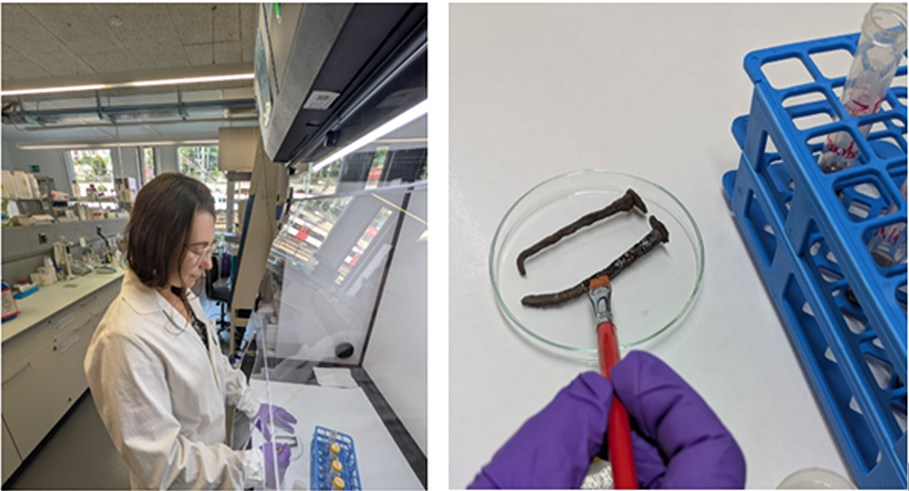
Figure 1: Application of tannic acid solution treatment.
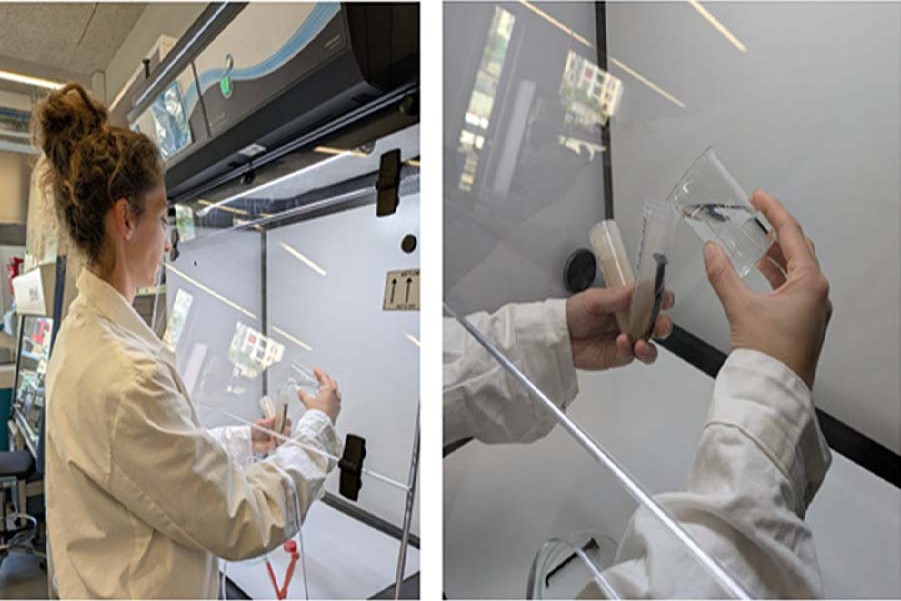
Figure 2: Application of dead biomass treatment.
What did we find?
The tannic acid treatment did form iron–tannate complexes, as expected. But the samples still showed signs of re-corrosion, suggesting that the treatment wasn’t fully effective.
On the other hand, the Meyerozyma biomass treatment led to the conversion of active corrosion into a more thermodynamically stable phase.
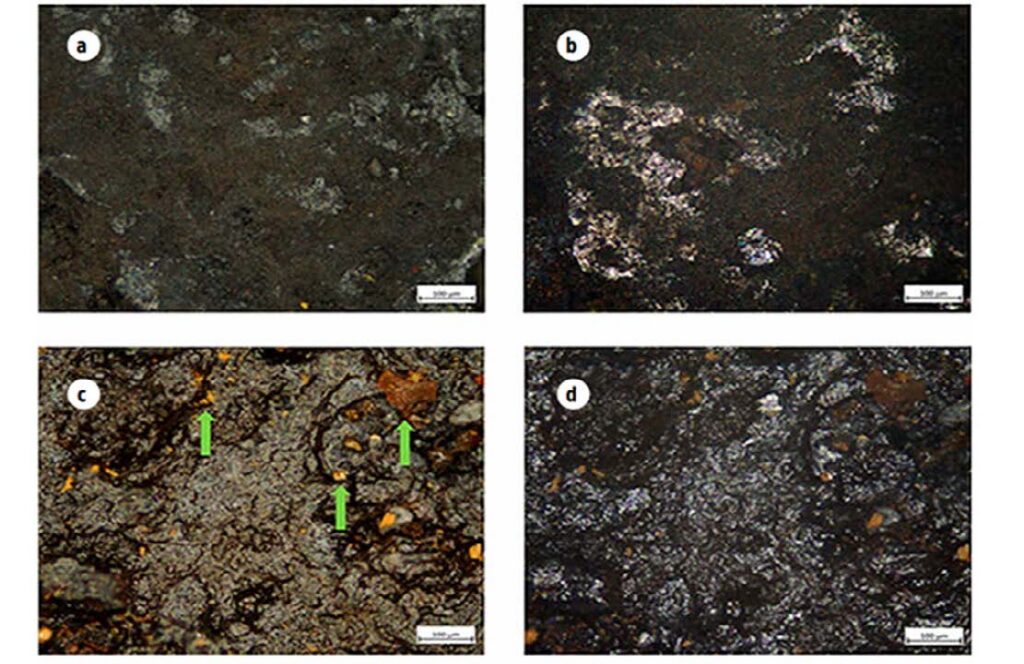
Figure 3: Optical microscopy of artificially aged steel coupon after treatment with Meyerozyma sp. dead biomass (a) DF, 10x, (b) smooth, mate layer with a few shiny zones BF, 10x. After tannic acid inhibitor treatment (c) with visible early signs of re-corrosion: reddish-brown particles scattered over the darker iron tannin layer DF, 10x, (d) shiny iron tannate layer with signs of re-corrosion BF, 10x EDF.
Why does this matter?
This research is more than just a lab experiment. It’s part of a broader movement toward green conservation methods that reduce health risks and environmental impact. The United Nations has emphasised the need for sustainable technologies, and biotechnological approaches like this one are a step in the right direction.
Plus, using dead biomass means there’s no risk of microbial growth or contamination, making it safe for use in museums and conservation labs.
What’s next?
We’re still in the early stages, but the results are encouraging. Could Meyerozyma sp. become a standard tool in the conservator’s kit? Quite possibly. More testing on real artefacts and long-term monitoring is ongoing, but the potential is clear.
Sometimes, the best solutions come from the most unexpected places — like yeast.
Reference
Petrasz, P., Junier, P., & Joseph, E., Utilization of dead biomass from an extremophilic yeast Meyerozyma sp. as a novel stabilization treatment for archaeological iron artifacts. Preprint for ICOMCC-Metal2025, 01-05 September, Cardiff