
Publication of “Defining Green in the Conservation of Cultural Heritage”!
July 29, 2026
The final GoGreen conference is almost here!
September 1, 2026
Part 1 of 3: Introduction and talks
Author: Nicole Gasparini Casari (CRT)
Introduction
As the GoGreen project approaches its conclusion, the GoGreen Academy marked an important milestone in translating four years of collaborative research into practical teaching resources. Hosted at The Courtauld Institute of Art in London, the two-day event brought together conservators, conservation scientists, educators and heritage professionals to explore how sustainability can be embedded into conservation practice through education, collaboration and shared learning.
Funded under the European Union’s Horizon programme, GoGreen was established to address some of the key sustainability challenges facing conservation today, including the absence of a shared definition of green conservation, the continued use of environmentally harmful materials and methods, and the need to reduce the environmental impact of conservation practice. Throughout the project, researchers developed new approaches to preventive and interventive conservation, greener treatment methods and materials, analytical techniques, and a digital decision-support tool designed to help conservators make more informed and sustainable choices.
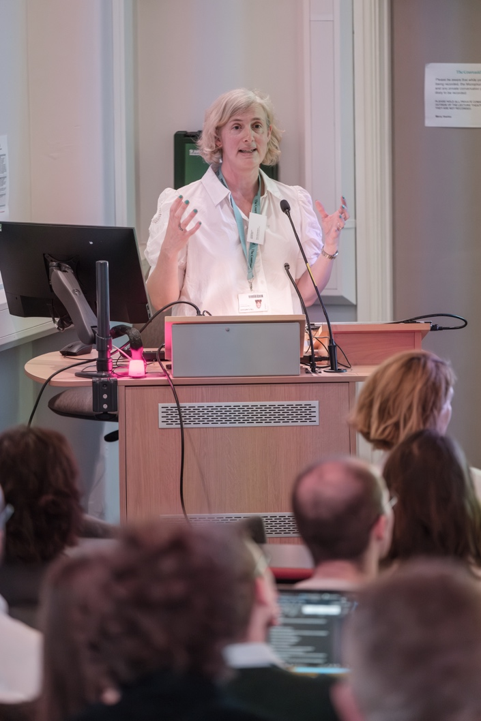
Figure 1: Clare Richardson (CRT) giving an overview of the GoGreen project and WP7.
The GoGreen Academy marks the culmination of Work Package 7 (Green Education), which builds on the research generated across the entire project and translates it into flexible educational resources for higher education, professional training and continuing professional development. Rather than creating a fixed curriculum, the WP7 team developed adaptable teaching modules that can be tailored to different educational contexts, helping educators integrate green conservation principles into their own courses.
A central outcome of this work are the WP7 Module Workbooks, which participants were invited to download via a QR code at the beginning of the event. Designed through a collaborative and iterative process involving educators, conservators and conservation scientists, the workbooks bring together the four teaching modules presented during the Academy. Each module includes learning aims, suggested teaching activities, adaptable session plans and supporting resources that can be freely incorporated into university teaching or professional training. Throughout the two days, participants tested selected activities from the workbook, discussed how they might be adapted to different teaching environments and were encouraged to provide feedback to support the continued refinement and wider dissemination of these open educational materials.
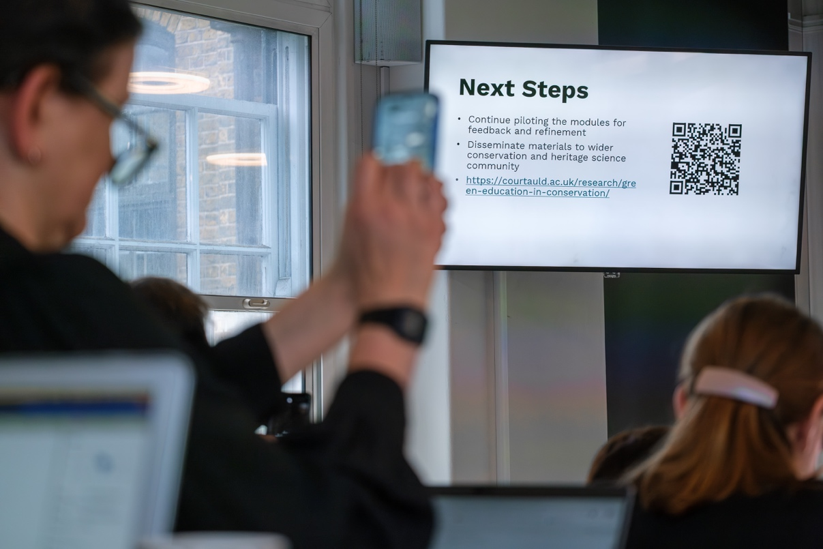
Figure 2: Attendees scanning the QR code to download the module workbooks.
1. Talks
The Academy opened with a series of presentations introducing participants to the principles underpinning green conservation before exploring how these ideas are being translated into practical tools and educational initiatives. Together, the talks demonstrated that sustainability is not simply about adopting new materials or technologies, but about rethinking how conservation decisions are made, communicated and taught.
Setting the foundations
The first presentations established a shared understanding of what green conservation means in practice. Gwen Fife (RM) introduced the collaborative work undertaken within GoGreen to develop the project’s definition of Green Conservation and the fourteen Green Parameters, a framework designed to help conservators balance environmental, social and heritage considerations when making treatment decisions. The definition was developed over more than two years through a highly collaborative process combining: review of more than 300 publications; analysis of how other sectors define “green”; consultation with professional organisations; over forty international focus groups; surveys and written reviews; input from several hundred conservators, educators and external experts. Rather than starting from individual conservation treatments, the team first identified conservation’s principal sustainability impacts by analysing the UN Sustainable Development Goals, European Green Deal objectives, Safe and Sustainable by Design principles and Life Cycle Assessment (LCA) methodologies. Rather than prescribing a single “green” solution, the framework encourages practitioners to weigh multiple factors and recognise that sustainable conservation is always context dependent.
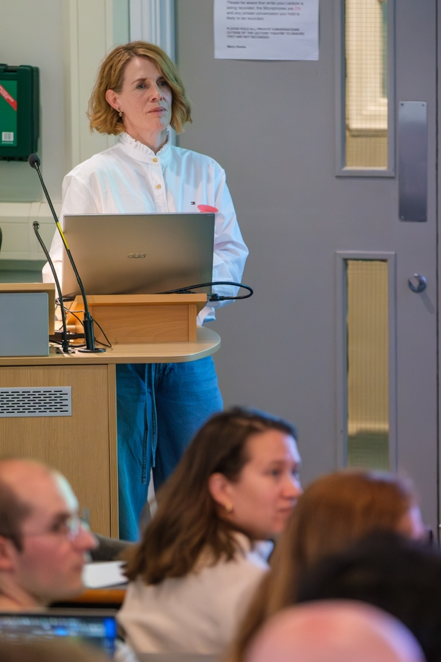
Figure 3: Gwen Fife (RM) presenting “Defining Green Conservation and Putting the Parameters into Practice”.
From principles to practice: the Digital Support Application
The following presentation demonstrated how the concepts introduced in the opening session are being translated into practical decision-making tools. Roberta Zanini and Giorgio Brugnone (IIT) presented the GoGreen Digital Support Application (DSA), developed within the GoGreen project to support conservators in comparing the environmental performance of materials and treatments.
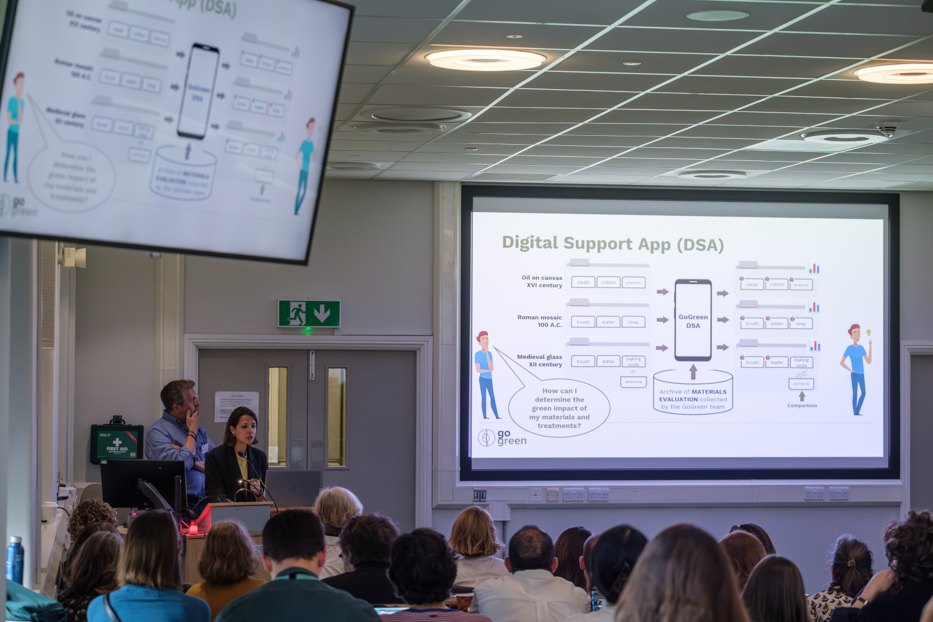
Figure 4: Roberta Zanini and Giorgio Brugnone (IIT) presenting the GoGreen DSA.
Combining life-cycle assessment data, toxicity information and project-specific inputs, the application enables users to evaluate different conservation options through the lens of the fourteen Green Parameters. Importantly, the speakers emphasised that the DSA is intended to support – not replace – professional judgement. Rather than providing definitive answers, the application equips conservators with transparent evidence that can inform decisions tailored to the specific needs of each project.
Teaching sustainability through interdisciplinary learning
The following presentations shifted the discussion from professional practice to education, asking how future conservators and conservation scientists can be prepared to address increasingly complex sustainability challenges.
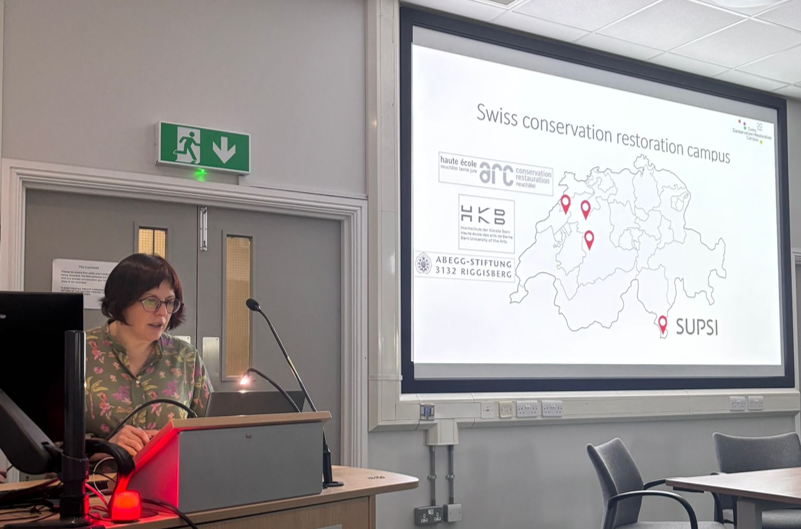
Figure 5: Edith Joseph (HE-Arc Conservation-restauration, HES-SO) presenting “Teaching Greener Conservation Practices”. (Image courtesy of the Courtauld Research Forum).
Edith Joseph (HE-Arc) and Marta Caroselli (SUPSI) explored how the principles introduced above can be embedded into conservation education. Drawing on the experience of HE-Arc (Haute École Arc Conservation-restauration), they presented a collaborative teaching programme that bring together Masters students from conservation programmes across Western Switzerland. In this interdisciplinary course students work through real case studies, role-playing exercises and shared projects.
Activities include measuring sustainability indicators for students’ own conservation projects; calculating carbon emissions associated with treatments; collaborative definition of sustainability terminology; Life Cycle Assessment exercises; material selection activities; museum energy management exercises; social sustainability role-play based on controversial heritage cases; collaborative action plans developed using a “jigsaw” teaching model. Instead of treating sustainability as a separate subject, the programme encourages future conservators to consider environmental, institutional and social dimensions as integral parts of professional practice, while learning to navigate the complex trade-offs that often accompany conservation decisions. The pedagogical model moves students from awareness towards practical action.
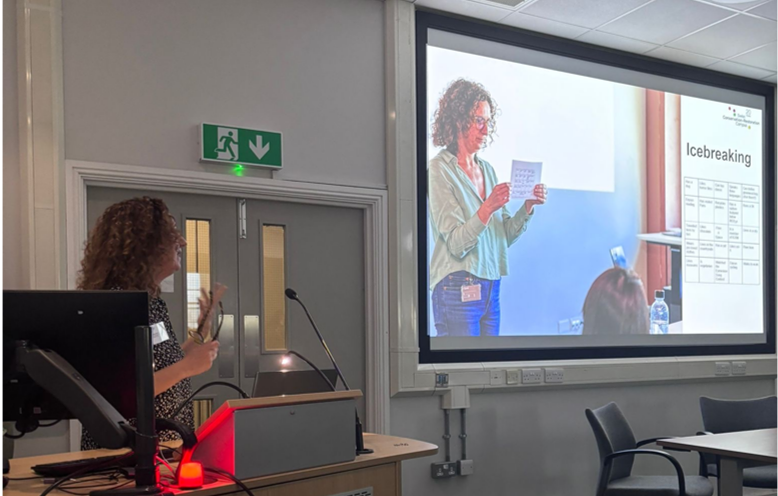
Figure 6: Marta Caroselli (SUPSI) presenting “Teaching Greener Conservation Practices”. (Image courtesy of the Courtauld Research Forum).
Claire Betelu (Paris 1 Panthéon-Sorbonne) highlighted the importance of interdisciplinary collaboration in conservation training, showing how students benefit from engaging with conservators, scientists and analytical specialists as they work together on shared case studies. One example focused on painting cleaning, where discussions moved beyond the choice of materials to include analytical imaging, ethical considerations and the long-term impact of intervention. Another explored the idea of heritage samples as finite resources, prompting participants to reflect on how scientific investigation can be balanced with the responsibility to minimise intervention. Rather than seeking maximum analytical information at any cost, the seminar encourages participants to ask whether “good enough” evidence may sometimes be preferable if it significantly reduces intervention.
Loïc Bertrand (ENS-Saclay) expanded this educational perspective by presenting innovative teaching initiatives developed within chemistry and heritage science programmes at ENS Paris-Saclay. Students work with authentic research problems instead of simplified textbook exercises, learning to evaluate complex, heterogeneous heritage materials rather than ideal laboratory samples. Students from across the university are encouraged to tackle authentic conservation problems, work across disciplinary boundaries and engage critically with the complexity of real heritage materials. By exposing students to multiple perspectives, the courses aim to cultivate the collaborative mindset and critical thinking skills that will be essential for advancing green conservation in the future.
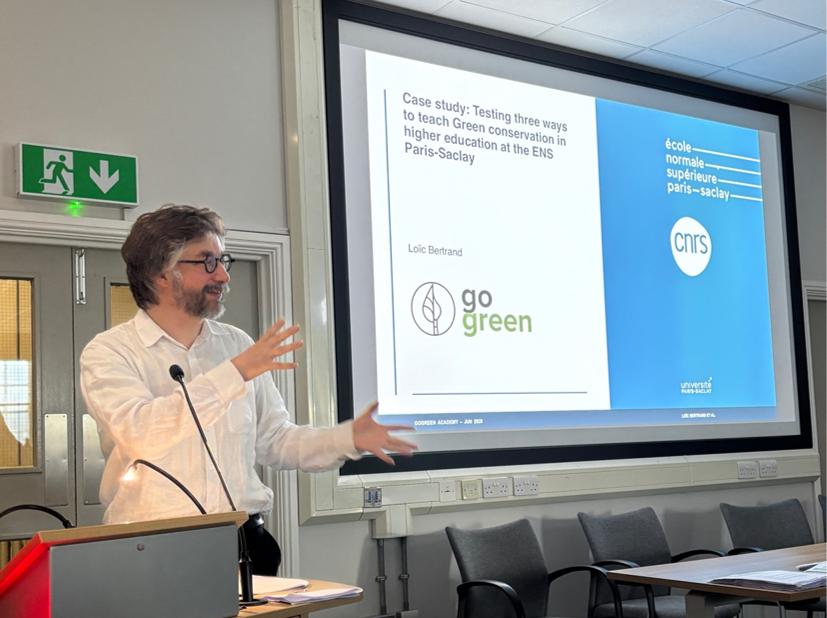
Figure 7: Loïc Bertrand (ENS-Saclay) presenting “Testing three ways to teach Green Conservation in Higher Education at the ENS Paris-Saclay.” (Image courtesy of the Courtauld Research Forum).
Conclusion
Taken together, the talks established a common starting point for the GoGreen Academy. They showed that green conservation is not simply a matter of finding substitute materials or adopting new technologies. It also involves changing how conservation decisions are evaluated, how evidence is shared and how future practitioners are prepared to work across disciplinary boundaries.
The talks therefore set the scene for the practical sessions that followed, where participants could explore these ideas through the GoGreen teaching modules themselves.
All images by Kate Green Photography, courtesy of The Courtauld Institute of Art, unless otherwise stated.