
The registration is open for GoGreen Final Event on 3 September!
July 14, 2026
Publication of “Defining Green in the Conservation of Cultural Heritage”!
July 29, 2026
Author: Momoko Okuyama (RM)
Introduction
On 25 June 2026, Han Zhou (PhD candidate at the University of Amsterdam) and myself (conservation scientist at the Rijksmuseum) hosted a focus group at the Rijksmuseum to introduce historical-recipe-inspired methods for the cleaning of tarnish on silver objects. It was one of the three focus groups that took place this summer. At the focus group on metal cleaning, we had participation from both institutions and independent studios. I was present to offer practical help for the focus group and thought a blog would be a nice way to capture the event.
The purpose of these focus groups is to share the current research progress with potential users of the method, and to gain insight into the wishes of the conservators. How comfortable do conservators feel about trying novel methods? What kind of information is necessary to gain the confidence of conservators in them. These were the questions we had as we welcomed six conservators to the world of paleo-inspiration: innovative treatment methods inspired by past material systems or approaches. Paleo-inspiration is a term coined by Loïc Bertrand, a member of the GoGreen consortium (Bertrand et al., 2018). Han compiled a customized database of historical recipes for metal cleaning, from which she harvested inspiration.
Introducing “new” methods
Han was in charge of the focus group on metals. Her PhD thesis focuses on the use of historical treatment methods as inspiration for sustainable practices in heritage conservation, and she is developing historical-recipe-inspired methods for the removal of silver tarnish.
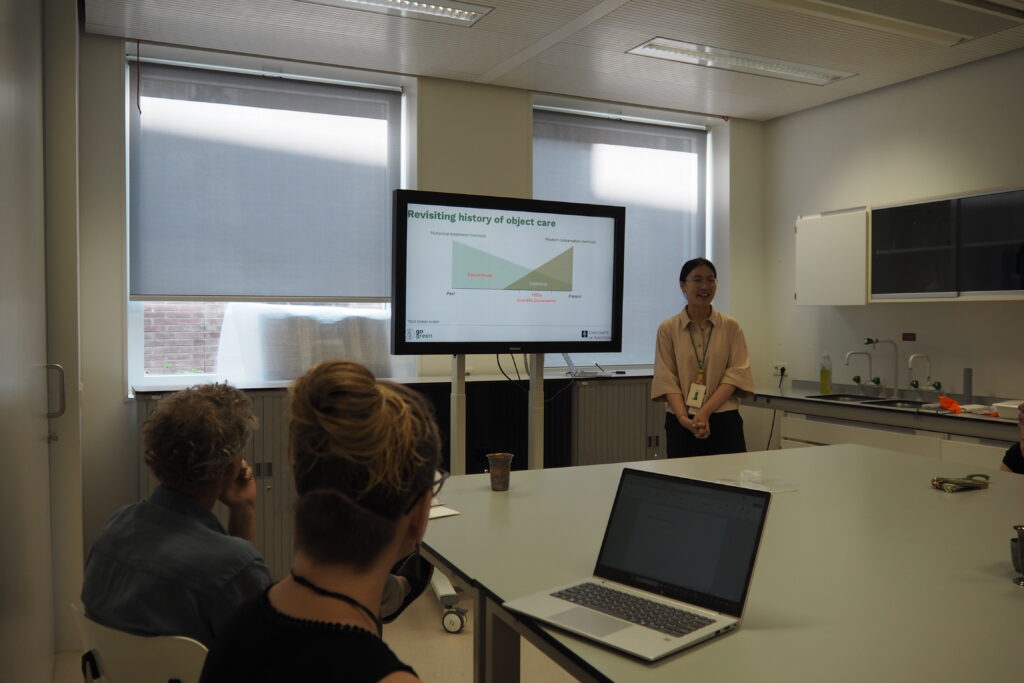
Figure 1: GoGreen researcher and PhD candidate Han Zhou presents to focus group participants. Image by Momoko Okuyama.
During the focus group, Han introduced two tarnish removal methods. One method re-introduces historical mechanical cleaning materials, including both abrasives and supports. Re-assessing the efficacy of these historical materials show surprising results that change presumptions towards their suitability for conservation treatments. The other method innovatively combines yeast and sodium thiosulfate, both mentioned in historical recipes for silver cleaning. While each of them cannot achieve successful tarnish removal respectively, they create an interesting synergy that is worth further material science exploration.
For each of the methods introduced in this focus group, Han prepared presentation slides on the new method. They contained information about historical recipe that inspired the method, preliminary results, successes and shortcomings, as well as technical data. The technical data contained information such as microscopic images taken under the scanning electron microscope. For the understanding of the various abrasives used for polishing, seeing the shape of the particles makes it easier to visualise its impact on the surface. A table of mass of coupons pre- and post- treatment gives a sense of relief to conservators by showing there is minimal or no loss of original material. There were also slides showing schematic drawings of the mechanism of function. One of the attending conservators commented that the understanding the underlying mechanism of action was especially helpful.
What makes historical-recipe-inspired approaches sustainable?
Based on the framework developed by the GoGreen project, sustainability of a conservation treatment can be captured using fourteen parameters G1-G14. They cover aspects including environmental and health impacts as well as energy and resource use. What is novel about the Green Parameters is that it includes conservation intervention aspects such as efficiency, treatment quality, accessibility and longevity of treatment as part of a sustainability evaluation.
Historical-recipe-inspired approaches may offer advantages in a number of these parameters, such as reduction of energy use (no need for fume hood), toxicity to the human and environment (often biodegradable materials) and accessibility (lower cost due to less processing).
Information exchange goes both ways
As an onlooker, I could see the value of such a focus group in the research & development phase of a treatment method. This is a phase where the research outputs and experiments can still be influenced. By including a hands-on activity during the focus group, where materials could be tested on study objects, discussion could be stimulated.
When the conservators tried the various historical abrasives, they mentioned various practical tricks they use to tweak the performance. For example, changing the textile used for rubbing, reusing old t-shirts (how green!) and using different types of media such as oil or Shellsol D40. Some of these tips may already have been considered by the researcher developing the method, but not always. There were also immediate, verbal feedback on the method: “Oh this works way too fast, I’d rather it worked more slowly” and “I love this one! How could such a simple ingredient work so well.” In addition to verbal anecdotes, Han encouraged participants to capture the treatment performance using an evaluation star. Inspired by Gwendoline Fife’s Solvent Star for the evaluation of varnish removal tests for paintings, the evaluation star allows for quick comparison of treatment options. They were also curious about the provenance of the materials, whether they were found in nature, ground at home or industrially produced.
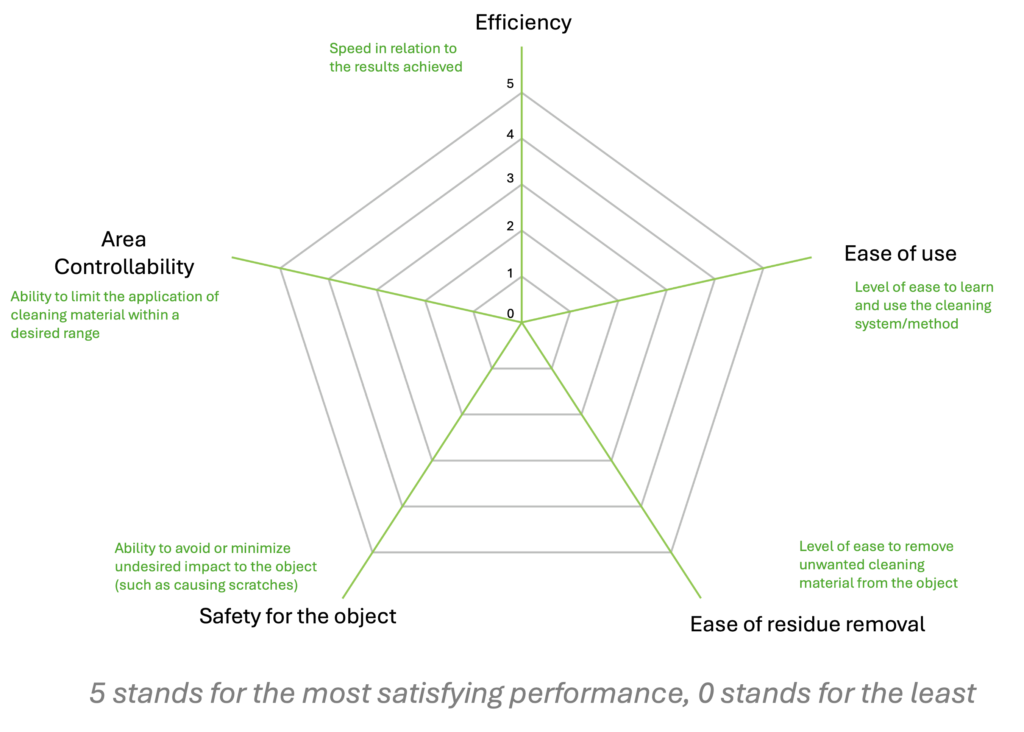
Figure 2: Image of Evaluation Star, designed by Han Zhou. Image courtesy of Han Zhou.
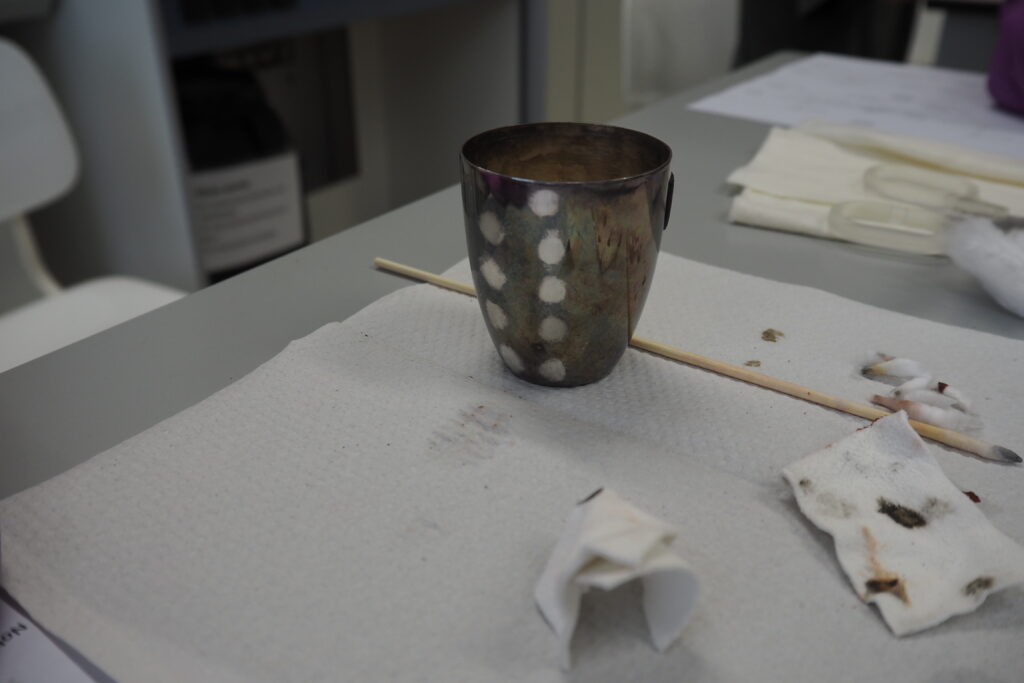
Figure 3: A participating conservator trialled various types of historical abrasives on a study object as well as calcium carbonate as benchmark. Image by Momoko Okuyama.
Future steps
Han comments that these focus groups are important, because “the design of sustainable, accessible, and practical methods cannot be achieved without the direct feedback from end-users.” She will continue investigating the mechanisms of the proposed methods and optimizing them.
Personally, the focus group was inspirational as it was a testament to how eager conservators are to integrate greener materials in their practice. I also felt that conservators may feel an affinity towards historical recipes, as history is a core part of the profession. There is a sense of familiarity that develops when thinking of how people in the past looked after cultural heritage. Thanks to them, so much has been passed down to our generation. Their techniques may not be as refined as that of now, but sometimes less taxing for the environment. Such historical recipes may teach us how to continue preserving the past without jeopardizing the future.
References
Bertrand, L., Gervais, C., Masic, A., & Robbiola, L. (2018). Paleo-inspired systems: Durability, sustainability and remarkable properties. Angewandte Chemie International Edition, 57(24), 7288–7295. https://doi.org/10.1002/anie.201709303
Fife, G. R. (2020). The solvent star: Assessing and documenting solvent selection. The Picture Restorer, 56, 41–44. https://sral.nl/application/files/9117/2225/2783/Final_Fife_TPR_56.pdf